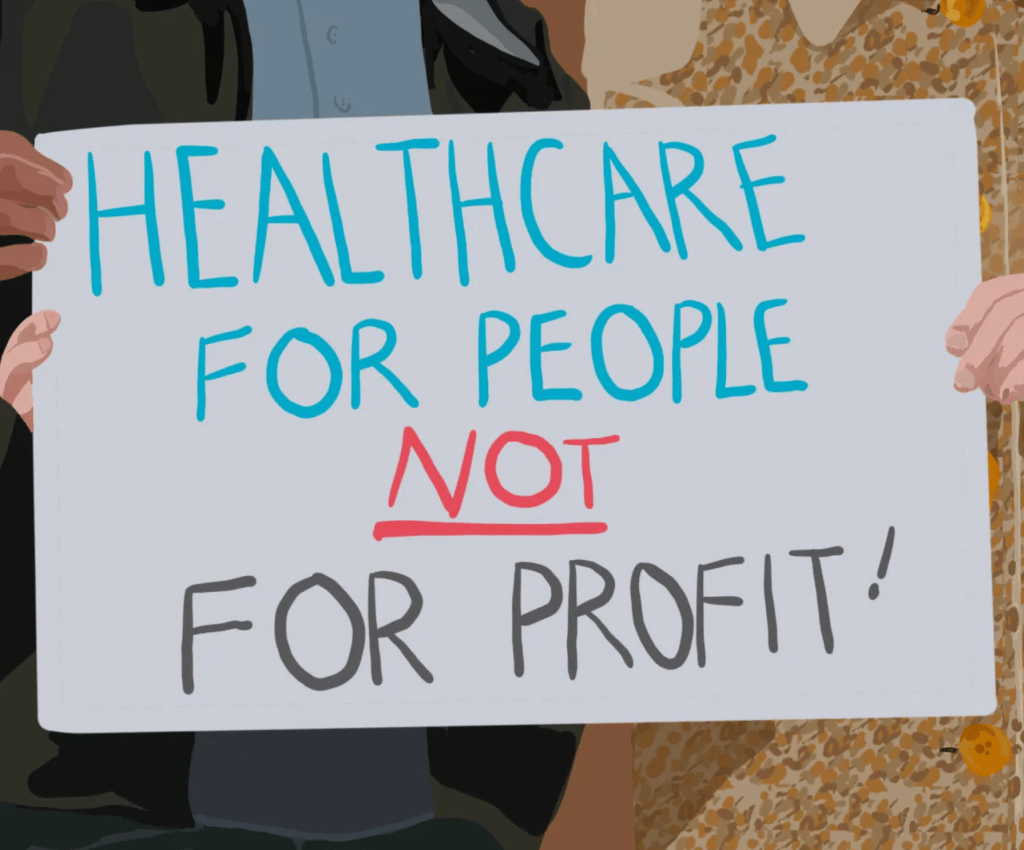
As I begin typing this article, I can’t help but think of my own family’s current experience with healthcare. My brother, Parker, was diagnosed with autism at the age of 2, and he has been applying for and receiving state-based services for as long as I can remember. On average, the cost of one session of therapy or service support (unsubsidized by insurance) is around $150.¹ Doing some quick math, let’s say the average person needing an accommodation requires three days a week of therapy or service support. Overall, this cost can amount to around $20,000 a year (being conservative). Considering the average income in the United States, before taxes, is $66,622,² we are expecting uninsured Americans to pay one-third of their salaries toward consistent services.
The Current Crisis
When did this current crisis begin? There are certainly years of healthcare-related struggles throughout the history of our country, but this current debate relates to the expiration of the ACA (Affordable Care Act), which can trace its roots to the Obama days. Some background on the ACA: The ACA was altered in 2021 to allow people with salaries up to 400% of federal poverty guidelines to receive enhanced tax credits.³ During this time period, due to the economic uncertainties of COVID, the people receiving premium tax credits reached over 23 million.
So then the question is obvious: what happened on January 1st (considering Congress did not include an extension of these subsidies in their effort to “un-shutdown” the government)? For starters, KFF (Kaiser Family Foundation) estimates that if you buy insurance from the national marketplace and receive financial assistance, your premiums will rise by about 114% on average.⁴ Furthermore, outside of government assistance, the Congressional Budget Office says that a standard plan could increase by almost 5% in each of 2026 and 2027.⁵
So, how many U.S. citizens are going to be affected by this loss in healthcare money? On average, about 20 million people received subsidies as part of the ACA.⁶ While it is important to discuss these numbers in the abstract, they are not just numbers; they are real people. In 2025, 24% of ACA recipients were above the age of 55.⁷ To explain with an example, a 60-year-old earning $64,000, which is 9% over the “400% of the federal poverty level,” will have to pay $14,900 in annual premiums in 2026; if that person were to make $62,000, they would only pay $6,200 in annual premiums.⁸ Basically, the gist of this change is that if you make over 400% of the federal poverty level, you will no longer receive the subsidies. With the poverty level being only $15,650, this person would spend almost 25% of their income on health insurance. So, obviously, people are choosing to become uninsured. In fact, the Urban Institute estimates over 5 million people will become uninsured⁹ this year alone. Even worse, that number may go up 500% in the next 10 years.
What’s Next?
To state the obvious, there will be an exponential rise in concierge doctor services, untreated illnesses, and a sharp decrease in support services for people with disabilities. The average family has also seen their healthcare costs rise due to international uncertainties and tariffs, increasing use of weight-loss drugs, and inflation by medical giants, mixed with an incoming reduction in clients. Essentially, this money has to come from somewhere; as usual, that somewhere is the independent sector.
Tangible Ways Nonprofits Can Help
For these articles, while I may express the issues in the world, it is truly pointless to state problems without solutions. If I were in a nonprofit healthcare role, I would immediately take the following steps:
- Call local medical service providers (physical therapy, rehabilitation, doctors that specialize in disability or elderly care).
- Get an itemized “cost of service” for each activity, with and without insurance.
- Now that the background research is done, inquire about previous nonprofits that have provided money or services and see how to connect.
- Interview other nonprofits to learn about how they support healthcare needs; tap into your original donor base to explain the new situation and see if they are interested.
- Collaboration, not competition! Rather than starting a new program, see if your nonprofit can support the resources of another nonprofit (at this point, you should know every healthcare nonprofit in the area from the research).
- Create a group-based plan on how to move forward; previous networks are easier to tap into instead of forming new ones.
- Create the campaign. In the healthcare world, target those needing help and travel to them. Put on events at service areas, ask to set up booths at rehabilitation centers, and create infographics for social media with a clear call to action. Don’t solicit or advertise; explain what the problem is and the tangible way you can help.
- Even by asking companies to speak at a lunch about healthcare challenges, or offering free “How-To’s” on navigating healthcare in rented-out spaces or virtual webinars, you can increase outreach.
References
1. Aime, M. (2024, May 23). How much does therapy cost without insurance? GoodRx. https://www.goodrx.com/health-topic/mental-health/therapy-without-insurance
2. SoFi Editorial Team. (n.d.). Average US salary by state and overall average. SoFi. https://www.sofi.com/learn/content/average-salary-in-us/ SoFi
3. Claxton, G., Rae, M., Damico, A., & Whitmore, H. (2024). ACA marketplace premium payments would more than double on average next year if enhanced premium tax credits expire. Kaiser Family Foundation. https://www.kff.org/affordable-care-act/aca-marketplace-premium-payments-would-more-than-double-on-average-next-year-if-enhanced-premium-tax-credits-expire/
4. Kim, C. (2024, March 12). ACA subsidies lower monthly insurance premiums for millions of Americans. ABC News. https://abcnews.go.com/US/aca-subsidies-lower-monthly-insurance-premiums-millions-americans/story?id=128804401
5. Kim, C. (2024, March 12). ACA subsidies lower monthly insurance premiums for millions of Americans. ABC News. https://abcnews.go.com/US/aca-subsidies-lower-monthly-insurance-premiums-millions-americans/story?id=128804401
6. Picchi, A. (2024, February 15). ACA health subsidies are keeping insurance prices down. CBS News. https://www.cbsnews.com/news/aca-health-subsidies-insurance-prices/
7. Iacurci, G. (2025, December 23). Expiring ACA subsidies could hit these Americans the hardest. CNBC. https://www.cnbc.com/2025/12/23/expiring-aca-subsidies-most-affected.html
8. Iacurci, G. (2025, December 23). Expiring ACA subsidies could hit these Americans the hardest. CNBC. https://www.cnbc.com/2025/12/23/expiring-aca-subsidies-most-affected.html
9. Buettgens, M., Banthin, J., & Green, A. (2024). 48 million people will lose coverage in 2026 if enhanced premium tax credits expire. Urban Institute. https://www.urban.org/research/publication/48-million-people-will-lose-coverage-2026-if-enhanced-premium-tax-credits
 CoffeyWritesImpact
Leave a comment